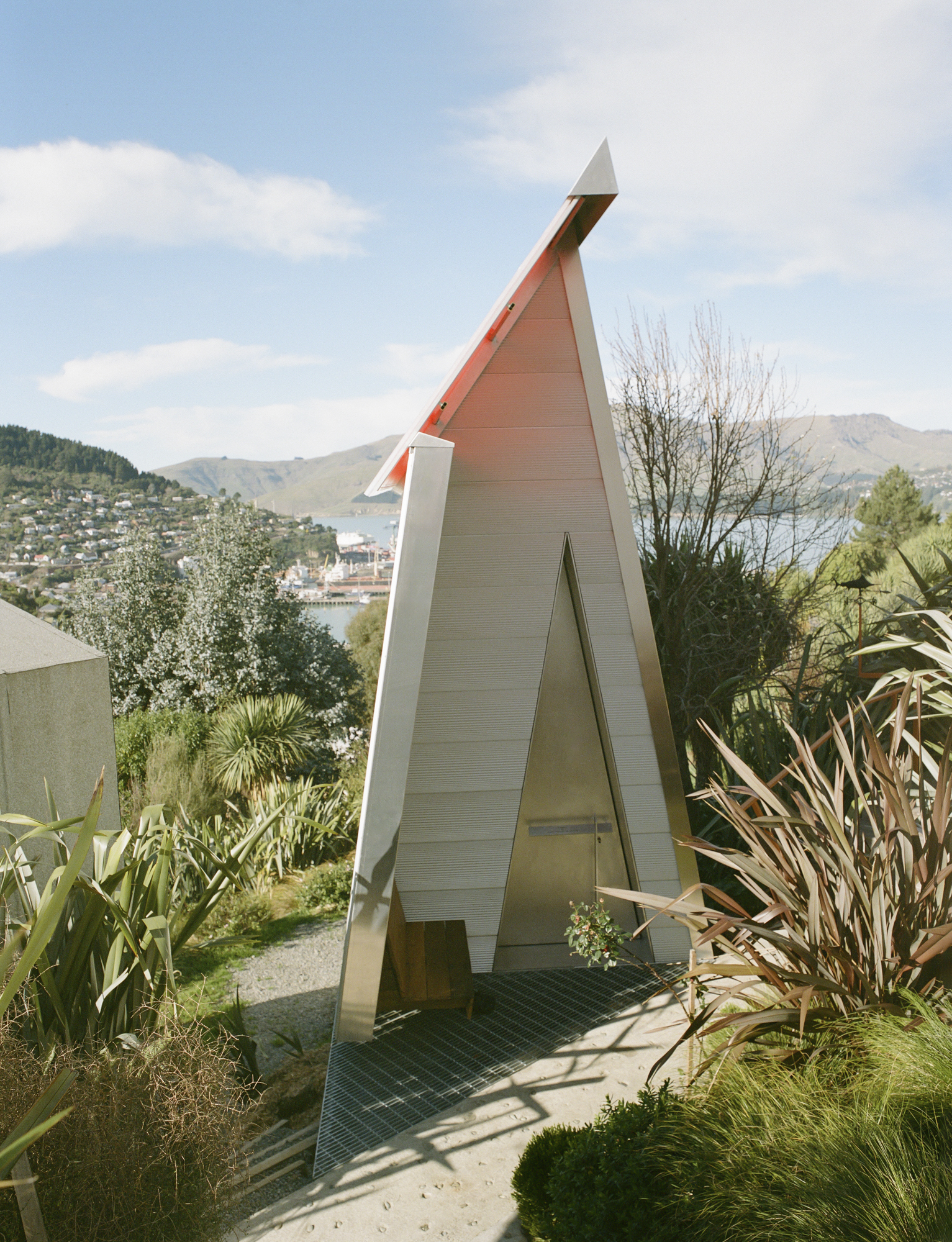
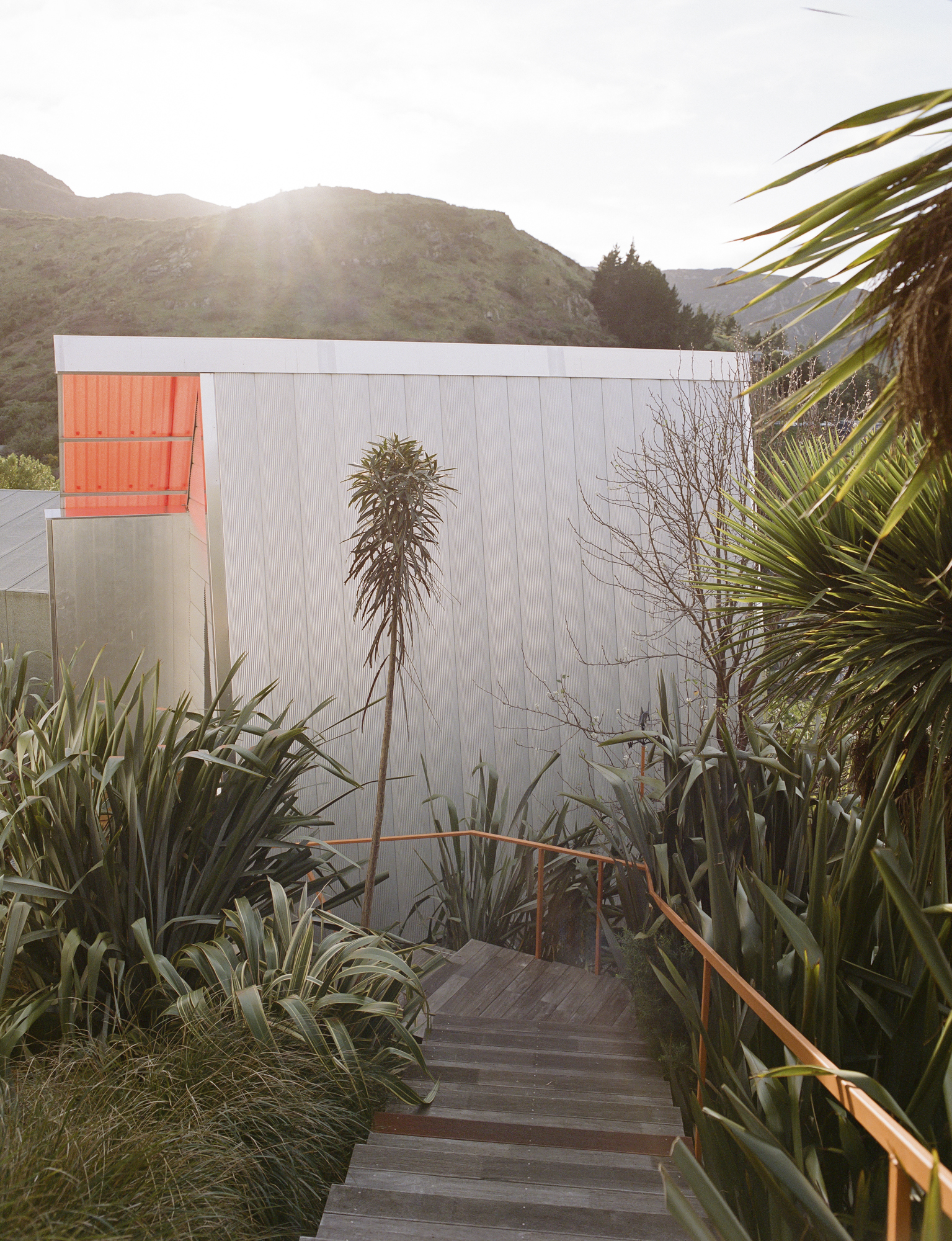
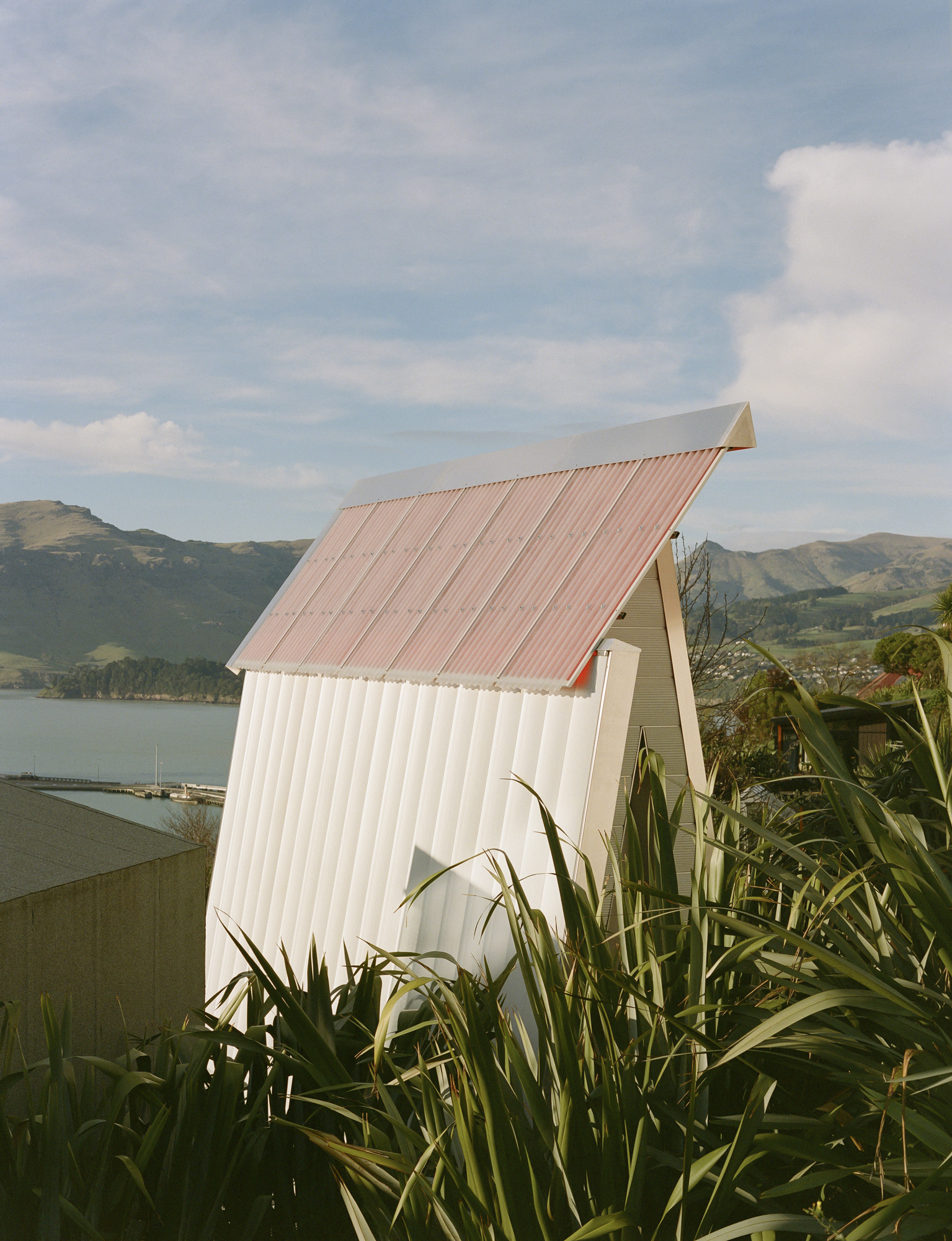
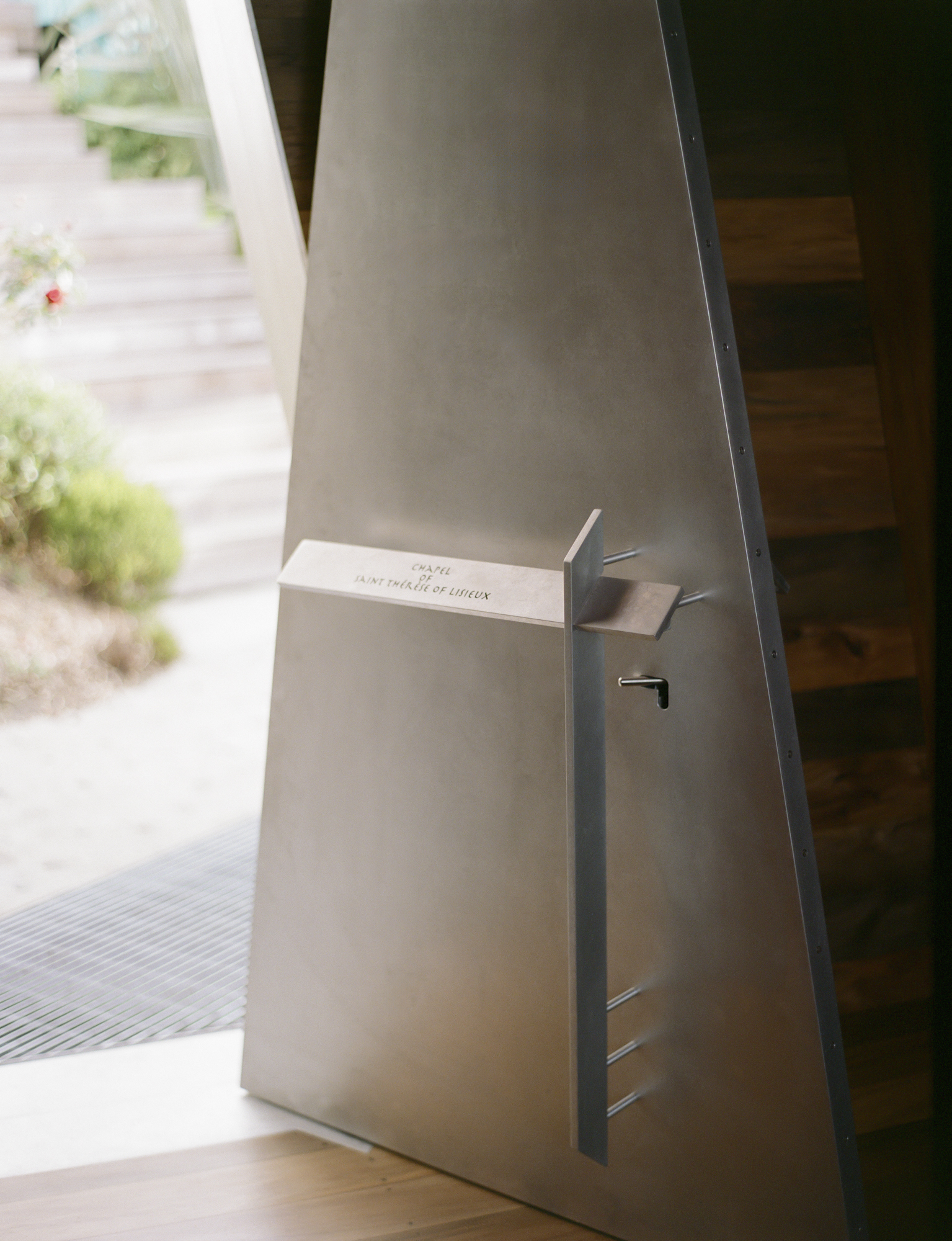
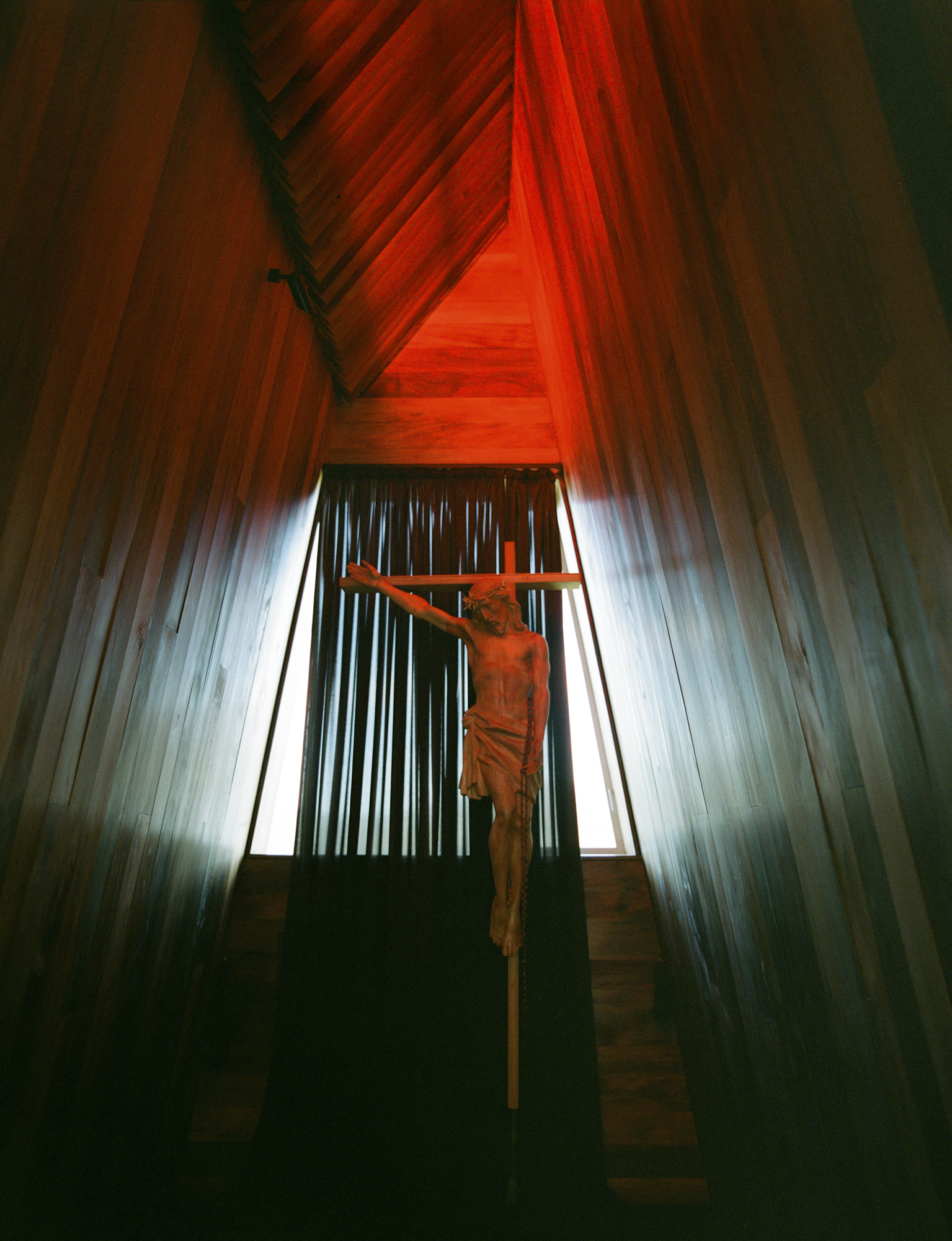
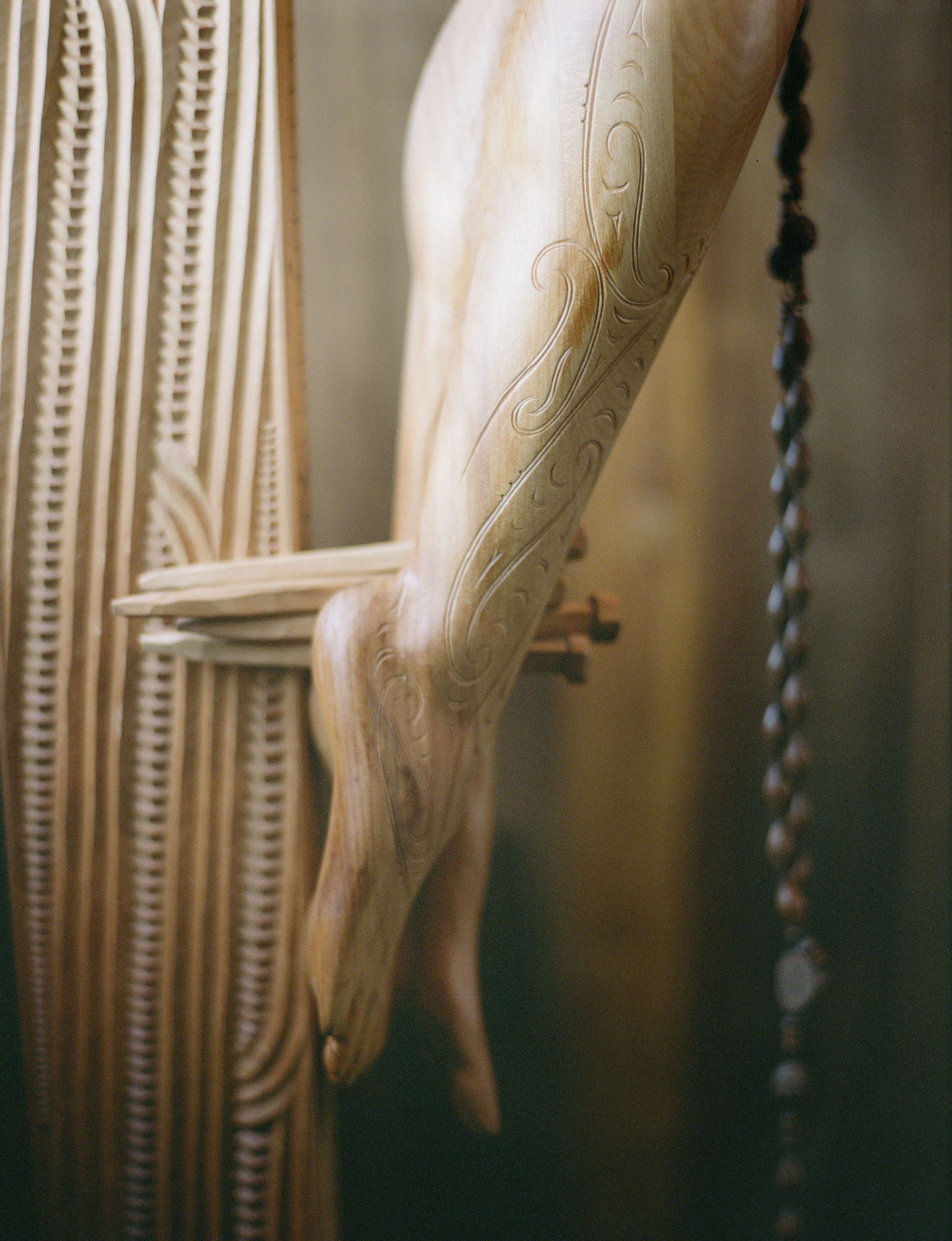
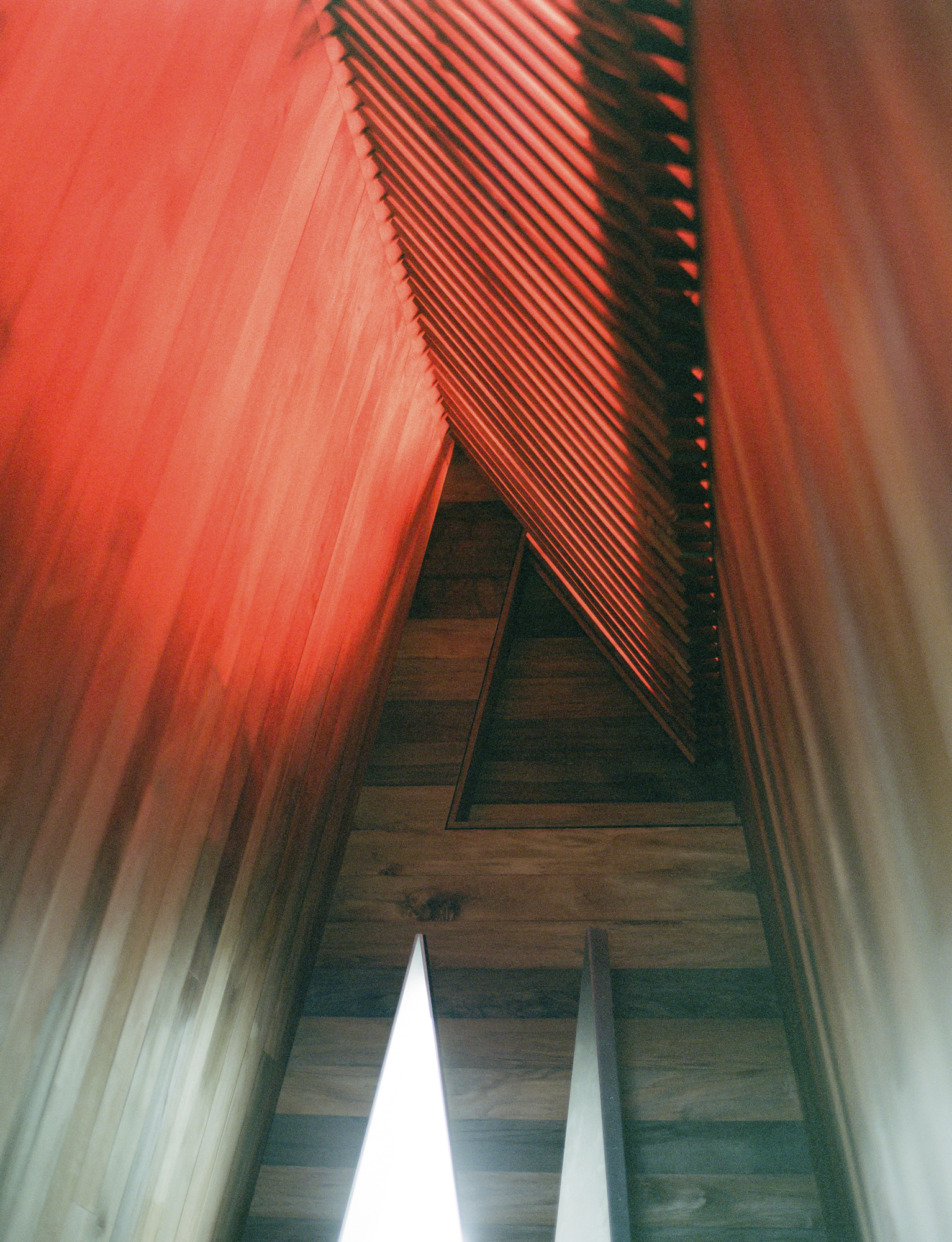
Conceived by the architect as a gift to the people of Christchurch, this small and beautiful work of public architecture demonstrates the profound impact that can be achieved through generosity, resourcefulness and care. Initiated during a period of limited work, the project helped sustain the practice and retain its staff. Built by the architectural team itself, it also became a valuable exercise in learning through making. Its size and scale emerged directly from the materials available, many recycled or gifted from other projects giving the Chapel a material history grounded in exchange and reuse. The metal-clad exterior form and triangular door offer a playful reference to the Holy Trinity, while a deliberately asymmetrical composition helps to draw light deep into the Chapel interior. Inside the TARDIS-like interior, timber lining from a 1,600-year-old rimu recovered from a river on the West Coast envelops the space with warmth, depth and a powerful sense of time. Overlapping ceiling planes temper the red polycarbonate surface above, allowing colour and light to animate the space without overwhelming its quiet atmosphere. The Stations of the Cross are carefully machine cut from timber, combining modern techniques with the chapel’s simple craftsmanship. Small in size but far-reaching in its appeal, the chapel has attracted international visitors. It is an architecture of generosity and invention: a modest building that transforms gifted materials, collective labour and spiritual symbolism into an enduring public treasure.
Chapel of St Thérèse of Lisieux