Te Whare Wānanga o Wairaka Unitec School of Architecture
Erik Koefoed is a finalist for his project "The City Reused; Adaptive Reuse for Urban Regeneration".
Project description
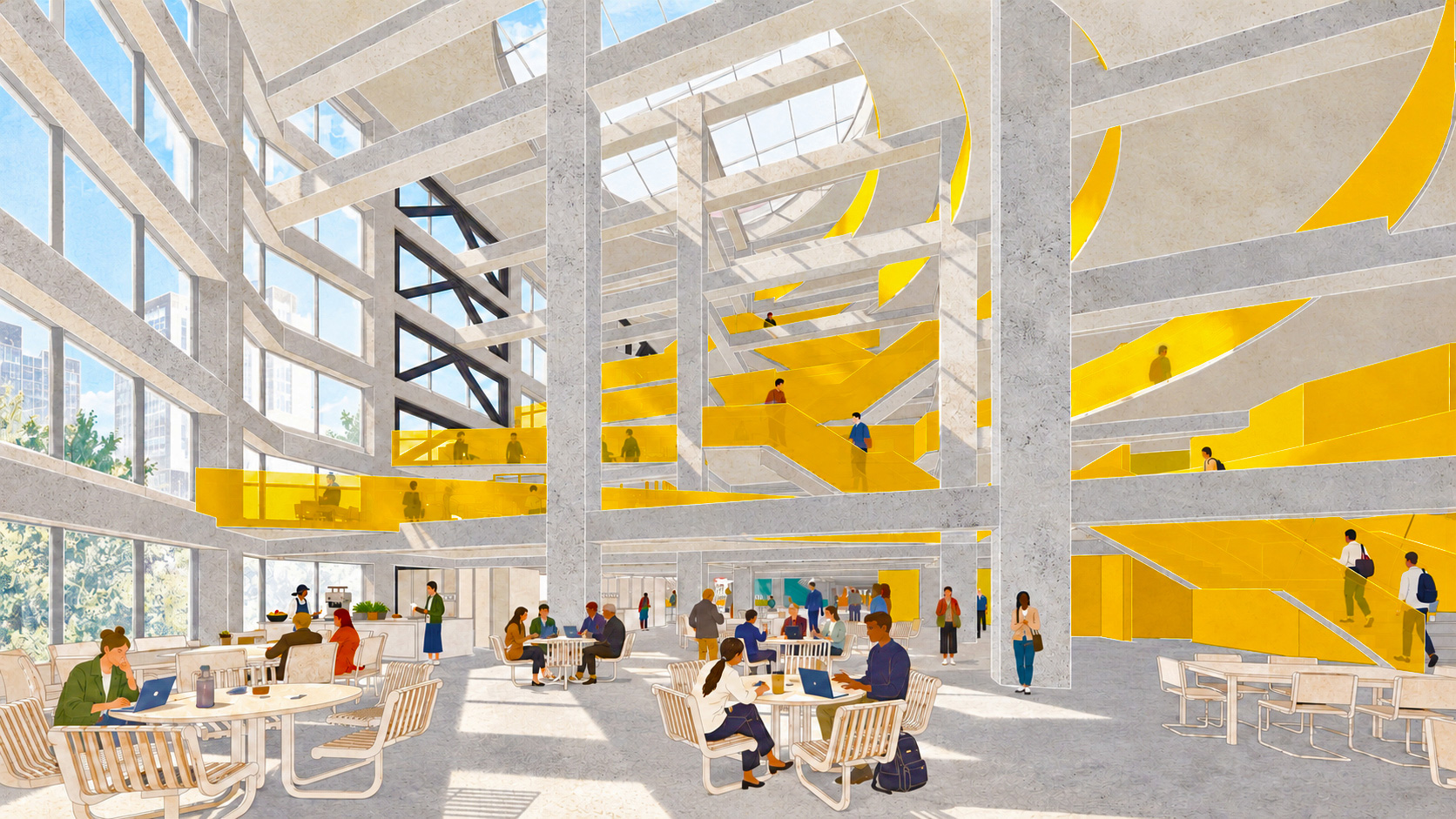
This project explores how adaptive reuse can transform an underutilised office building into a vibrant, mixed-use node that contributes to the regeneration of its surrounding urban environment. Rather than replacing the existing structure, the design builds upon its established urban relationships, contextual significance, and architectural identity to accommodate new ways of community living, working, and interaction.
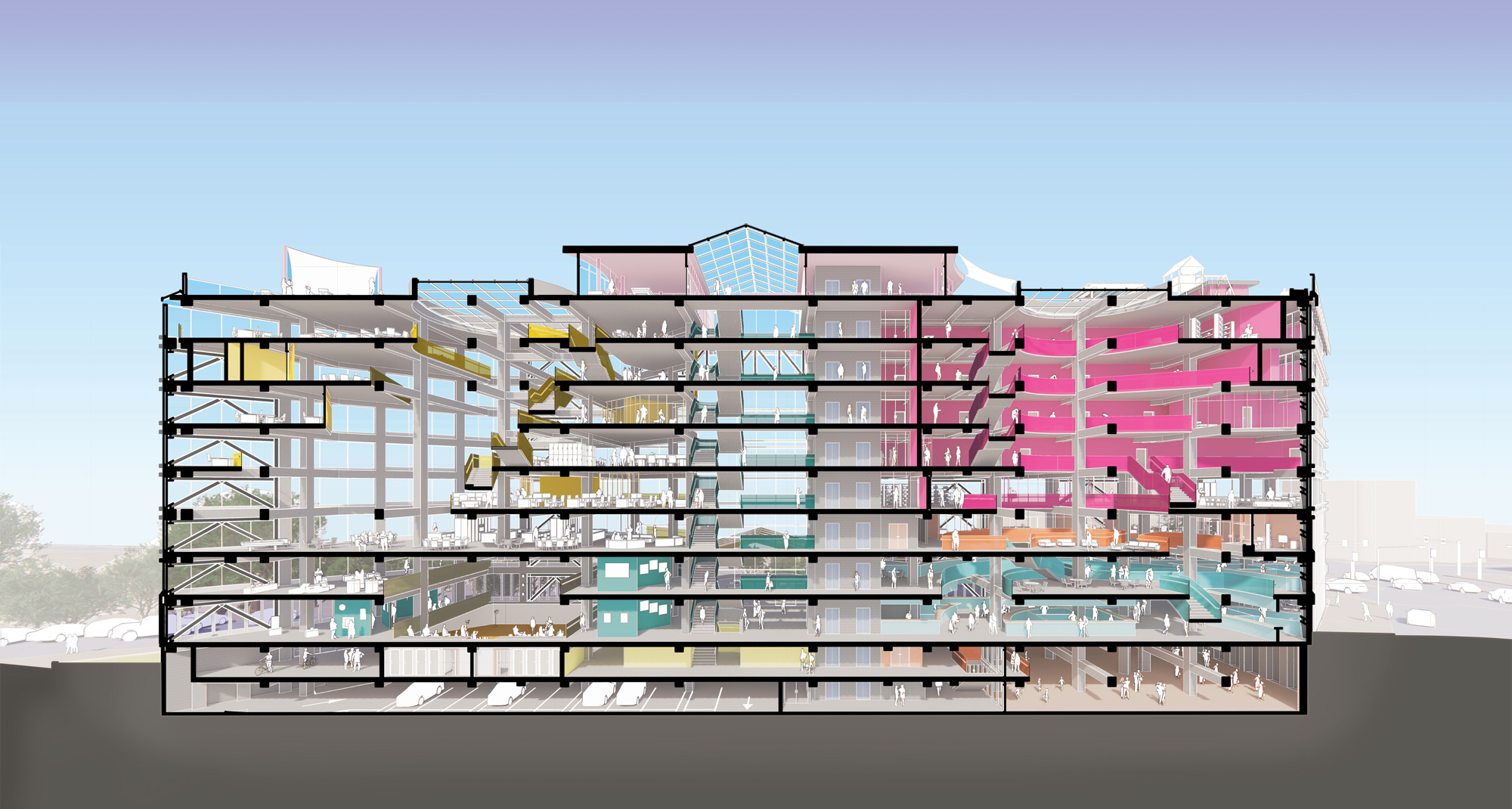
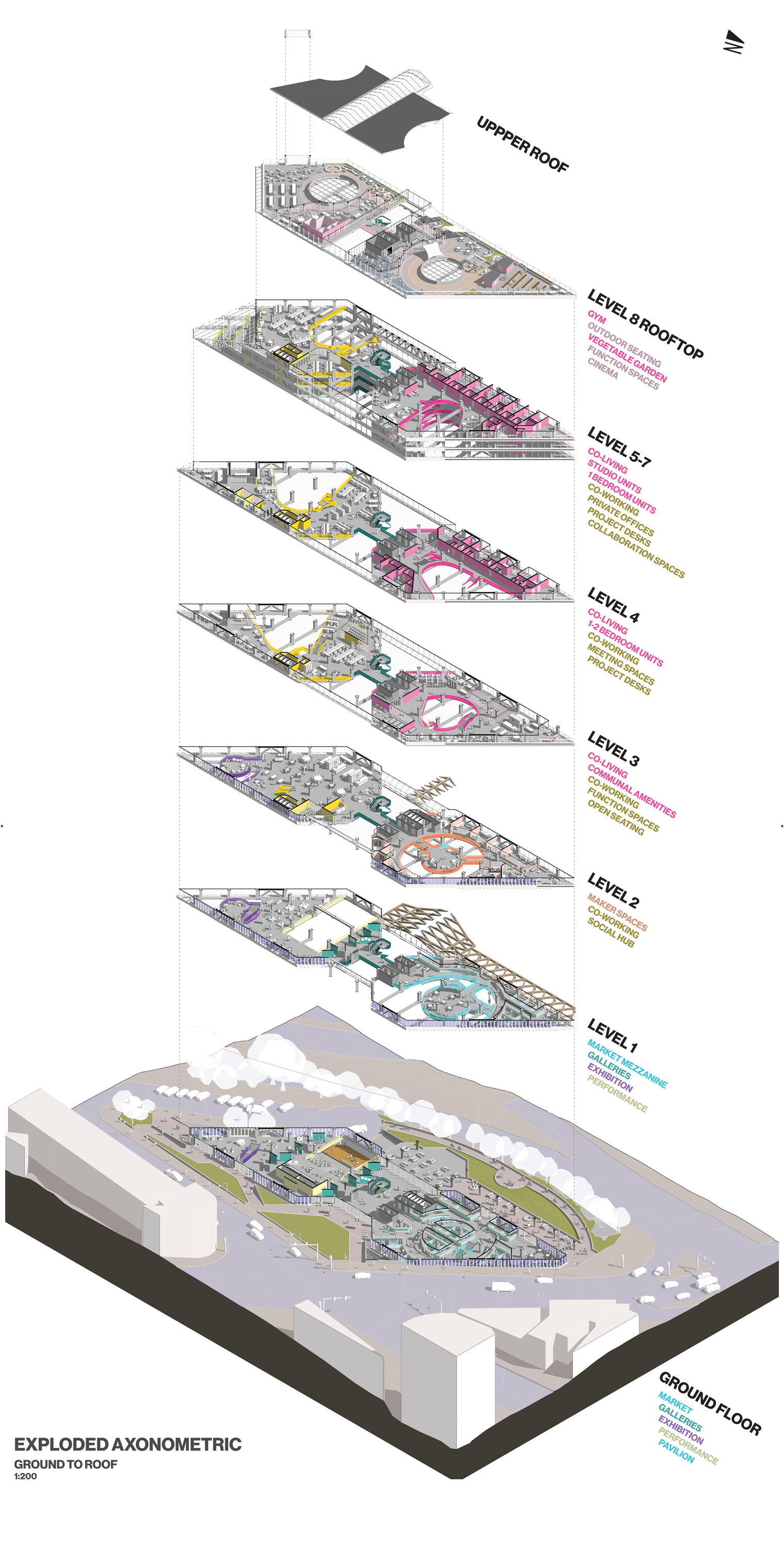
Located near Auckland’s Karangahape Road, the project reimagines a siloed 1980s building as a place of exchange between diverse people and activities. By applying bold design strategies to reshape how the spaces are inhabited, the design challenges the limitations of a single-purpose building and constrained geometry, introducing complementary programmes that encourage activity throughout the day and evening.
Programme selection is informed by the existing cultural, creative, and commercial identity of Karangahape Road and broader city context. Rather than competing with local businesses, the project seeks to strengthen them by attracting new visitors and encouraging movement in the area. Low-frequency, high-volume activities, including exhibitions, performances, and markets, create a destination that draws large audiences. Everyday occupation is sustained by co-living, flexible workspaces, rooftop activation, and studios. Together, these programmes encourage social, cultural, and economic exchange and interaction extending beyond the building itself.
Guided by research into adaptive reuse and Openness and Coexistence theory, the design balances the retention of urban networks with interventions that improve accessibility, connectivity, and flexibility. Shared spaces encourage informal encounters, while adaptable areas accommodate changing activities and community needs.
The project positions adaptive reuse as more than building preservation and demonstrates how existing structures can become catalysts for urban regeneration, reinforcing established communities and supporting the continued evolution of the city.