Waipapa Taumata Rau—University of Auckland Te Pare School of Architecture & Planning
Isla Turner is a finalist for her project "Stories Made With The Sea: Steps Towards a Renewal of Foreshore at Shoal Bay".
Project description
This project researches relationships between land and sea. Aotearoa New Zealand’s relationship with water has fundamentally shaped both its geography and its identity. In Tāmaki Makaurau Auckland, that relationship is one that infrastructure and reclamation have radically altered.
The western shore of Shoal Bay is the site of the previous Harbour Bridge toll plaza. It is a site symptomatic of a broader shift in Auckland’s relationship with its harbor. Severed by the construction of the Harbour Bridge and motorway approaches, the Bay’s once local maritime edge has become buried beneath reclamation. Infrastructure does not simply organise movement but restructures what can be seen and recalled. The motorway’s forward channeling favours destination over location leaving unseen immediate place and its ecologies.
From 1959 until 1984, motorists stopped at a toll plaza to pay for crossing the bridge. The toll collectors accessed their booths through an underground tunnel. The toll is gone, but crossing still comes at a cost for local awareness and environmental and aquatic qualities.
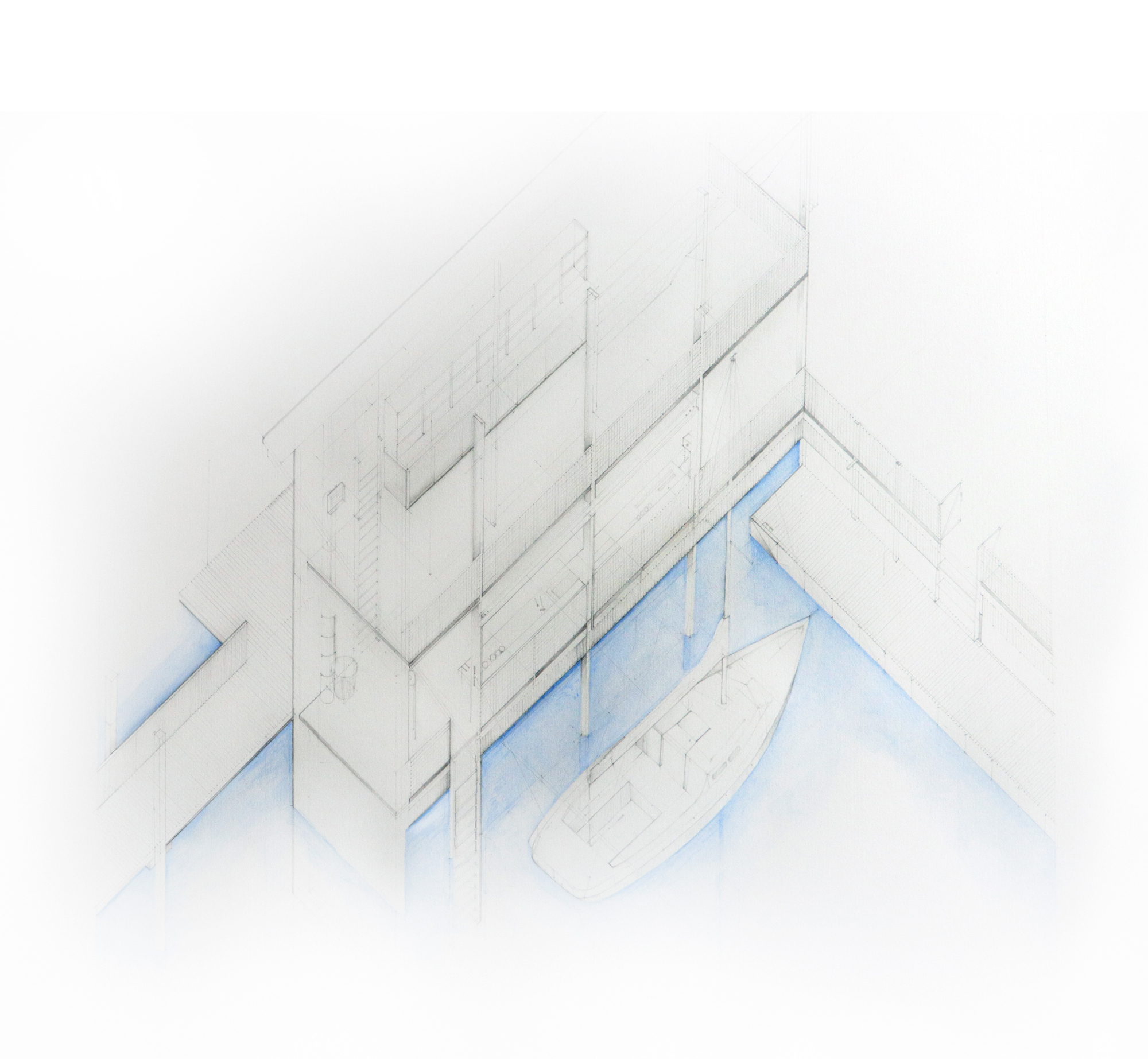
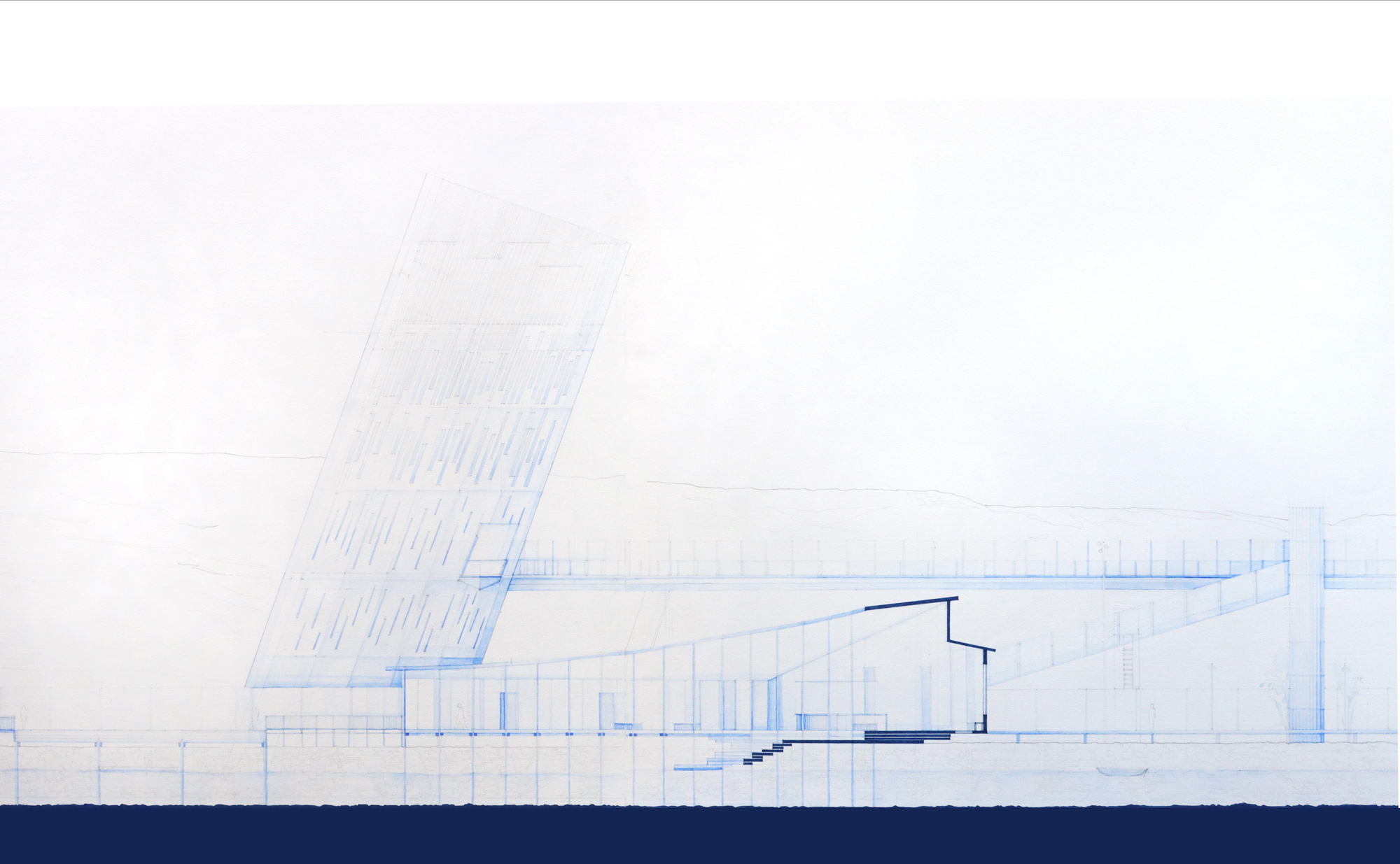
The project stitches land to sea, proposing a series of architectures that aims to reestablish its once active maritime edge and restoring care for the sea. At the site of the toll plaza a tilted rain tower rises from the underground tunnel with a circular pedestrian footbridge passing through it. From here a sea walk braids a new coastal edge, on which sit three buildings: a Watch House for surveying the Bay’s water environment, a Pontoon for social gathering and marine awareness, and a Boat Shop for sharing and learning boat craft. Together these structures act as devices for restructuring attention, and making the possibility for new stories to be made with the sea.
The project offers a template for considering the many sites of foreshore disruption that compromise our marine heritage.