
Richard Naish (c2000–2010)
John Walsh

Richard Naish was one of the first architects I met, and wrote about, after I became editor of Architecture New Zealand. It was the early 2000s, only a couple of years after Richard had founded his practice, RNA Studio. (Almost immediately, the firm had been renamed RTA Studio, after Tim Melville joined as partner; he was to occupy this role for more than a decade.) It was a pleasure to encounter Richard. Aside from his obvious talent, he possessed personal qualities – enthusiasm, optimism, empathy, collegiality and a wry sense of humour – that are invaluable in a profession so reliant on relationships and so susceptible to exigent circumstances.
What was particularly impressive about Richard was his willingness to engage. Of course, as an editor, I would appreciate this quality. One of the skills of successful architects is the ability to communicate complex projects to a range of audiences, and Richard is very good at this, as he has demonstrated at, for example, numerous award-winning appearances at the World Architecture Festival. But his commitment to engagement is just as pronounced at the more profound level of his practice. One of Richard’s strongest professional traits is his determination to explore the possibilities of every commission, whatever the type of project or size of budget. He is a courageous architect, as willing to test himself, and the imagination of a client, as he is to submit his work to peer review.
This characteristic was in the DNA of RTA Studio from the beginning and was clearly evident as the firm developed over its first decade. In that period, under Richard’s design leadership, RTA Studio realised a series of commissions that varied in scale but shared a common capacity to surprise. (Richard’s architecture has always exhibited the Vitruvian virtue of delight.) As with most young practices, much of RTA’s early work was concerned with modifications to existing conditions. Richard proved to be an adroit practitioner in the fields of alterations, additions and urban insertions. Typically, he made the most of opportunities presented by projects in places that were a little worse for wear and in need of revivification.
One of these edgy locations was Auckland’s historically seedy Fort Street. RTA’s conversion of an old building to offices for a law firm – the recipient of an NZIA Auckland Branch Award in 2002 – prefigured Fort Street’s subsequent rejuvenation. On a corner site in a scrappy part of Newton, Richard elegantly deployed robust materials – concrete and steel – to allow a little commercial building to both withstand and enhance its environment. (The building won an Auckland Branch Award in 2005.) And in city-fringe West Lynn, RTA’s interventions in a characterful but neglected streetscape were significant factors in the area’s transformation.
An especially graphic illustration of RTA’s approach to urban renewal projects is the small store – for the past 20 years, a much-valued neighbourhood bookshop – that the firm slotted into a strip of heritage retail buildings on Richmond Road. This deft exercise in architectural surgery, winner of a New Zealand Award for Commercial Architecture in 2006, demonstrated Richard’s skill in expressing individual identity while promoting collective cohesion. The sculptural concrete implant contrasts with and complements its brick neighbours, and in its balancing of design distinction and contextual consideration, the project anticipated later, and more overtly ornamental, RTA buildings, such as Ponsonby’s Mackelvie Street Retail Precinct (New Zealand Architecture Award for Commercial Architecture, 2015).
RTA’s conversion of a lecture theatre on AUT’s North Shore campus – winner of a New Zealand Award for Architecture in 2004 – demonstrated what was to become an enduring commitment to innovative and student-focused design in the education sector. In the public realm, the culmination of RTA’s first decade, and the project that announced the arrival of the practice to the wider city and, courtesy of its success at the 2009 World Architecture Festival, the global architecture community, was Ironbank, on Karangahape Road. The ambitious building received the 2010 New Zealand Architecture Medal. (Officially, therefore, it was the architectural profession’s building of the year.) Again, Richard produced a synthesis of deference, observing the scale of old K’Road, and distinction: Ironbank soars thrillingly above the rear service street as a seemingly precarious stack of steel-clad containers. The building was the most significant architectural event on K’Road in more than half a century.
Under Richard’s leadership, RTA Studio emerged from its first decade as one of Aotearoa New Zealand’s most promising architecture practices. Sixteen years later, it is simply one of the best.
John Walsh is the former editor of Architecture New Zealand and author of a dozen books on New Zealand architects and architecture.
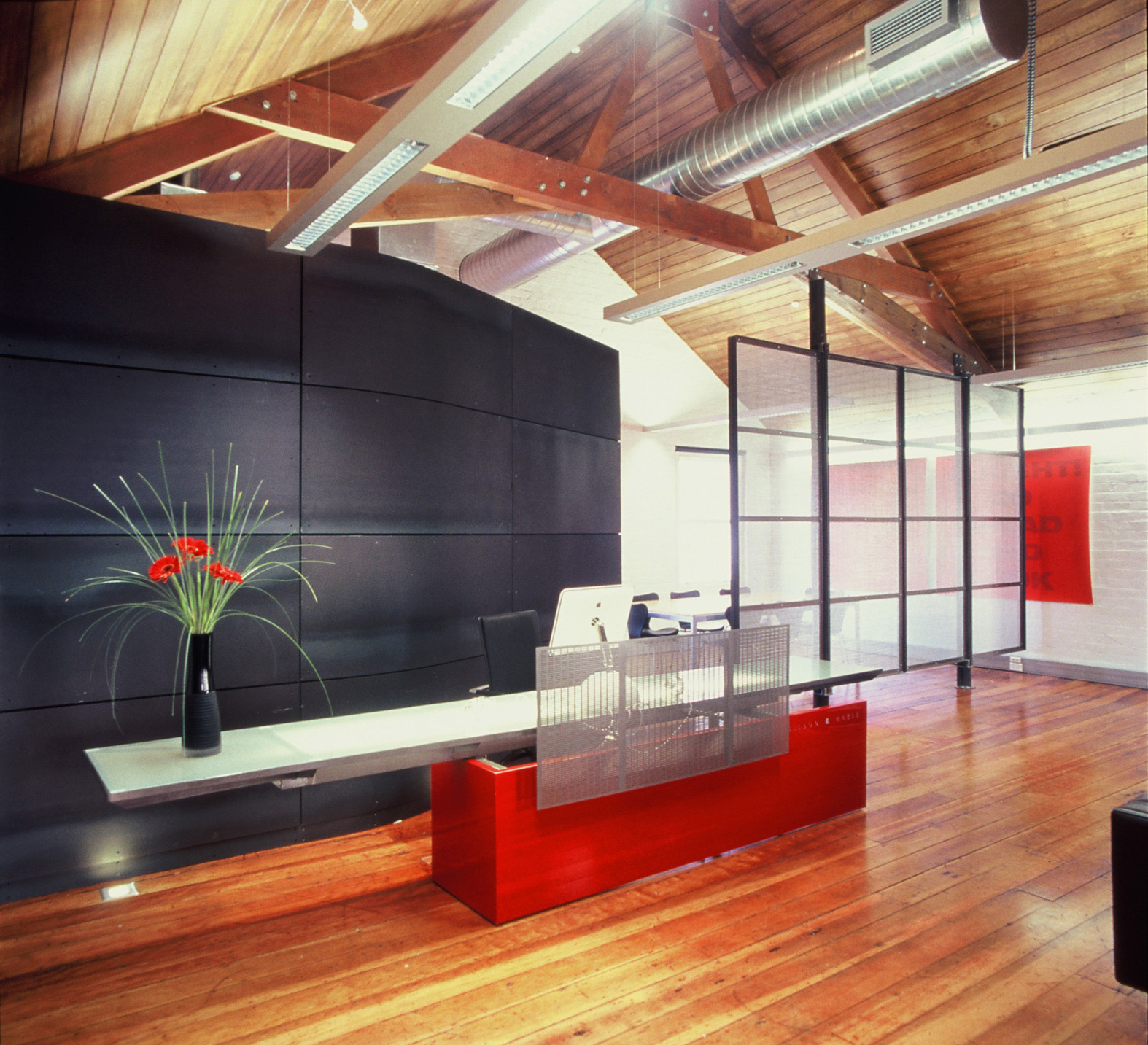
Fort St, 2002
Photograph: Patrick Reynolds.
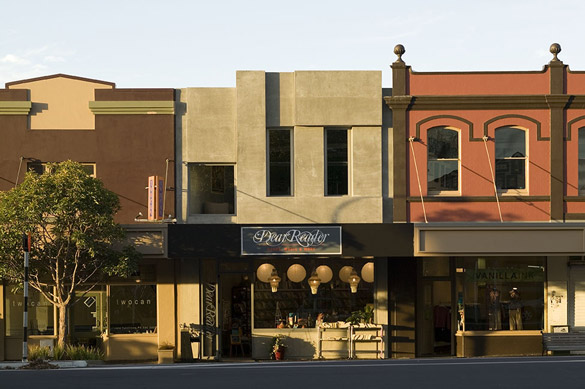
440 Richmond Road, 2006
Photograph: Patrick Reynolds.
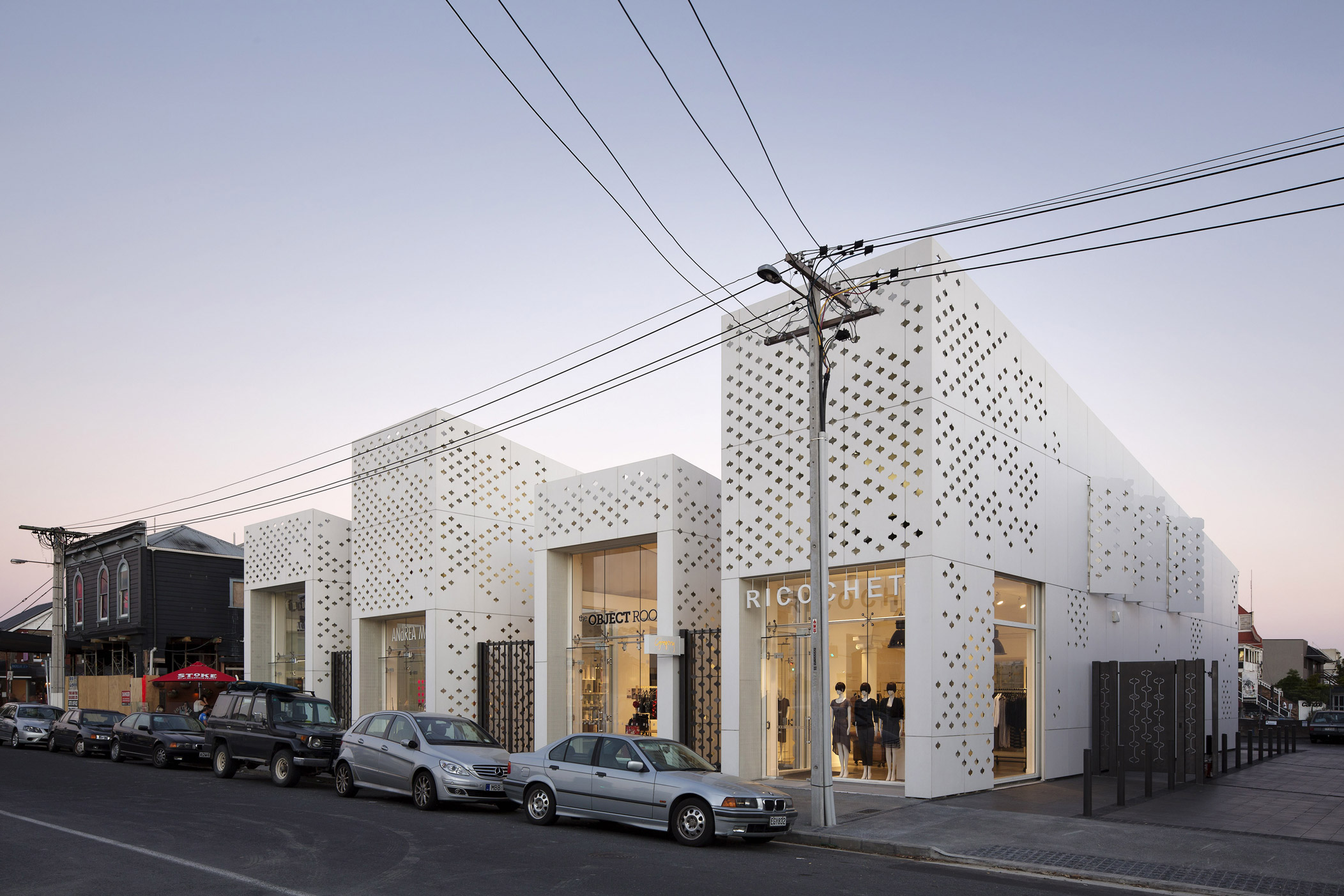
Mackelvie Street Retail Precinct, 2015
Photograph: Patrick Reynolds.


