
Golden Whakapapa
Dr Andrew Barrie

The first time I heard about Rich Naish was from Pip Cheshire, sometime around 2006. I was working in Pip’s office, and over a staff lunch he was gently cajoling the team to be more energetic in embracing new technology.
He was making his point, as he often did, through a story: during his time at Jasmax, a keen graduate intern there had worked an overnighter to figure out a piece of software to be able to present a digital model to a client the next day. The grad was soon hired into the Jasmax team for a full-time role. Rich’s name only came up at the end of the story, but I knew enough to connect it to the mostly small but striking RTA Studio projects I’d seen popping up around the inner city and on the pages of Architecture New Zealand.
Rich’s recollection of the software incident is a little less dramatic, but with both Pip and Rich now Gold Medallists, it changes the meaning of such generational connections. As two of the golden fruit on the family tree of Aotearoa architecture, the branch that connects them takes on special importance. Casting our eye around the family tree for other such similarly fruitful branches, there are plenty to see: linking multiple Gold Medal-winning firm Structon Group (before the 1990s, the Gold Medal was awarded to buildings rather than to people) and Ian Athfield, Gordon Moller and Stuart Gardyne; between Andrew Patterson and Gary Lawson; and the more meandering connection from Group Architects to Marshall Cook and on to Julie Stout, David Mitchell and Jack Manning.
Rich is heir to one of the great lineages in Aotearoa New Zealand architecture: Rich, through Pip and Pete Bossley at Jasmax, connects to Ivan Mercep at JASMaD and on to Ian Reynolds at KRTA. From Reynolds, the line passes back to F. Gordon Wilson in his days as Government Architect, to William Gummer of Gummer and Ford, and from there both to English maestro Edwin Lutyens in London and to Daniel Burnham, a founder of the Chicago School; all the Kiwis in this lineage were recipients of the NZIA’s Gold Medal in its various forms.
In Aotearoa New Zealand, we’re becoming much more attuned to the importance of whakapapa and the notion that lines of kinship provide identity, and that they tangibly locate and bind us to particular people and places. In our architectural family, these lineages highlight a fascinating question: Where do innovators come from? In a world, and a country, with no shortage of talented architects, what allows some to achieve lasting recognition? Much as we might be attracted to the notion that innovators spring forth from sheer talent and force of will, the most common answer is that they emerge from contact with slightly older innovators. There are a few high-profile exceptions to this rule – Tadao Ando in Japan or, closer to home, Peter Beaven – but the apprenticeship model largely holds. For Kiwis, this challenge to our deep-rooted, though perhaps fading, sense of egalitarianism might create some twitchiness, but researcher Roxanne Williamson, studying the American architecture scene, argued that the pattern isn’t the outworking of an establishment network. She suggested that what passes between mentor and mentee is not a methodology, stylistic approach or set of social connections, but the courage and self-confidence for a designer to pursue their own vision.
Is this what passed from Pip to Rich?
Another story that was frequently told by Pip provides one answer: speaking of his early days in practice when his projects were mostly villa extensions, kitchen alterations and the like, Pip described how they would aim with each project (despite how humdrum it might be) to generate some achievement – to produce a really good set of documents, to develop some clever details and so on. Likewise, a defining characteristic of RTA Studio’s early days was an ability to conjure bold architecture from unpromising commissions. This ability to find the freedoms in any given situation no doubt boosted RTA’s capacity to exploit the big opportunities when they came along. When, after a series of little commercial buildings – mostly renovations of decrepit city fringe buildings – a key client handed Rich’s team a large site on Karangahape Road, they were able to produce Ironbank, one of the most celebrated buildings of its era.
As the scale and scope of RTA Studio’s work has expanded, this opportunism has taken on a more adventurous form. What has come to define the mature work of RTA is a willingness to tackle the big problems of the day: expanding the potential of mass timber at the Fisher & Paykel Global Headquarters and, alongside Irving Smith Architects, at Scion; finding alternative approaches to architecture that addresses te ao Māori, such as at Tarawera High School, Wairoa Kura Kaupapa or the Tūrama house; or tackling the problem of housing affordability with the Living House.
As a byproduct of this valuable work, the hope is that a new generation of innovators – the clever young staff bringing these projects to life – is being grafted onto our architecture family tree. In an expanding enterprise like RTA Studio, many of these folk will stay within the company. We can already see, though, the next generation emerging, such as Andrew Kissell of Ōtepoti Dunedin practice bell + co architecture, Raphaela Rose of ahha and Sophie Wylie, founder of boutique property developer Artifact Property. But, unusually for a high-profile Kiwi architect and perhaps more significantly, Rich is teaching at Waipapa Taumata Rau University of Auckland, which is no doubt expanding the set of connections between past, present and future. In the years to come, what stories will Rich be telling about the golden youngsters that passed through his studio and his classroom?
Dr Andrew Barrie FRSNZ, FNZIA is a professor at Waipapa Taumata Rau University of Auckland. He is active as a designer, writer and researcher.
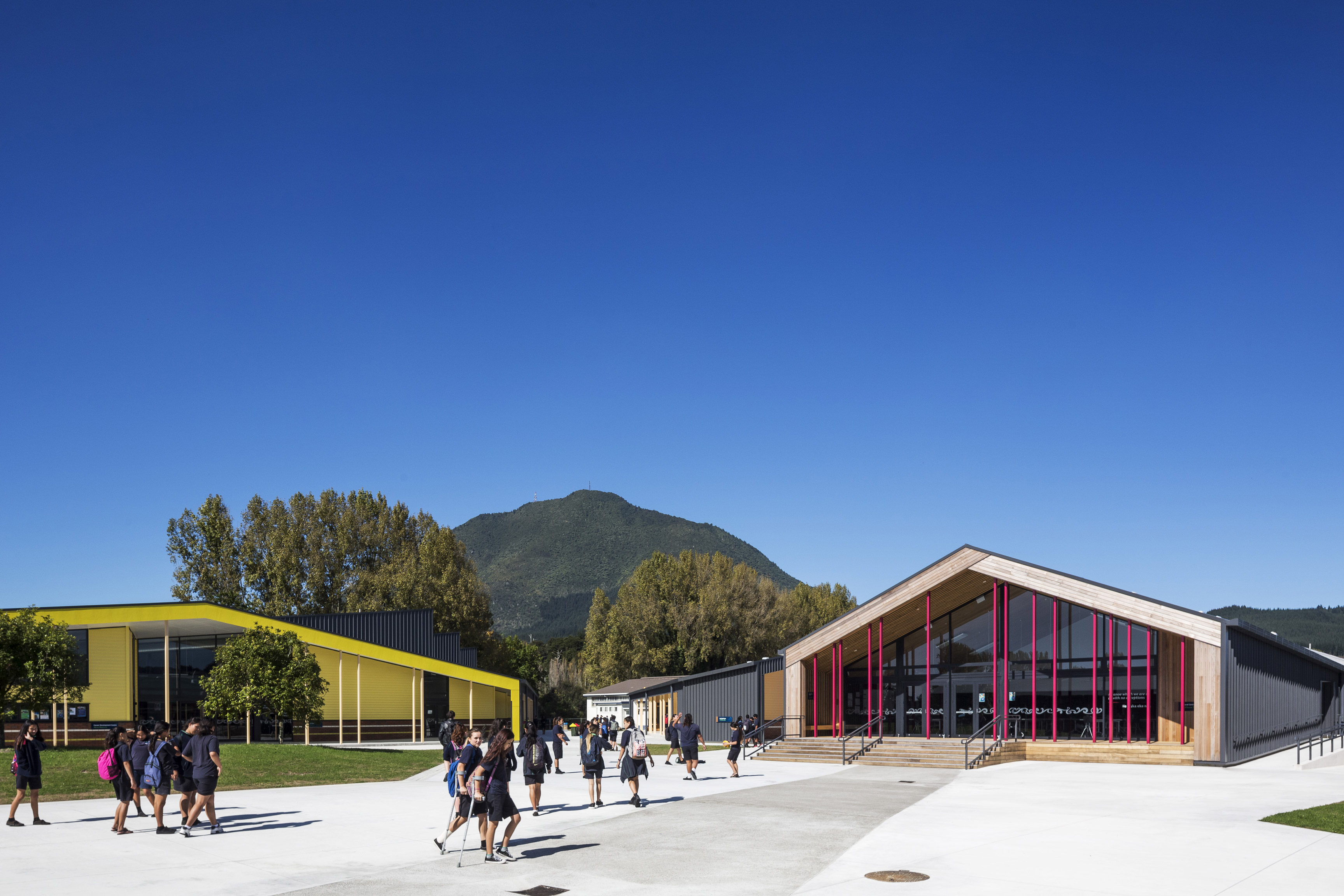
Tarawera High School, 2016
Kawerau. Photograph: Patrick Reynolds.
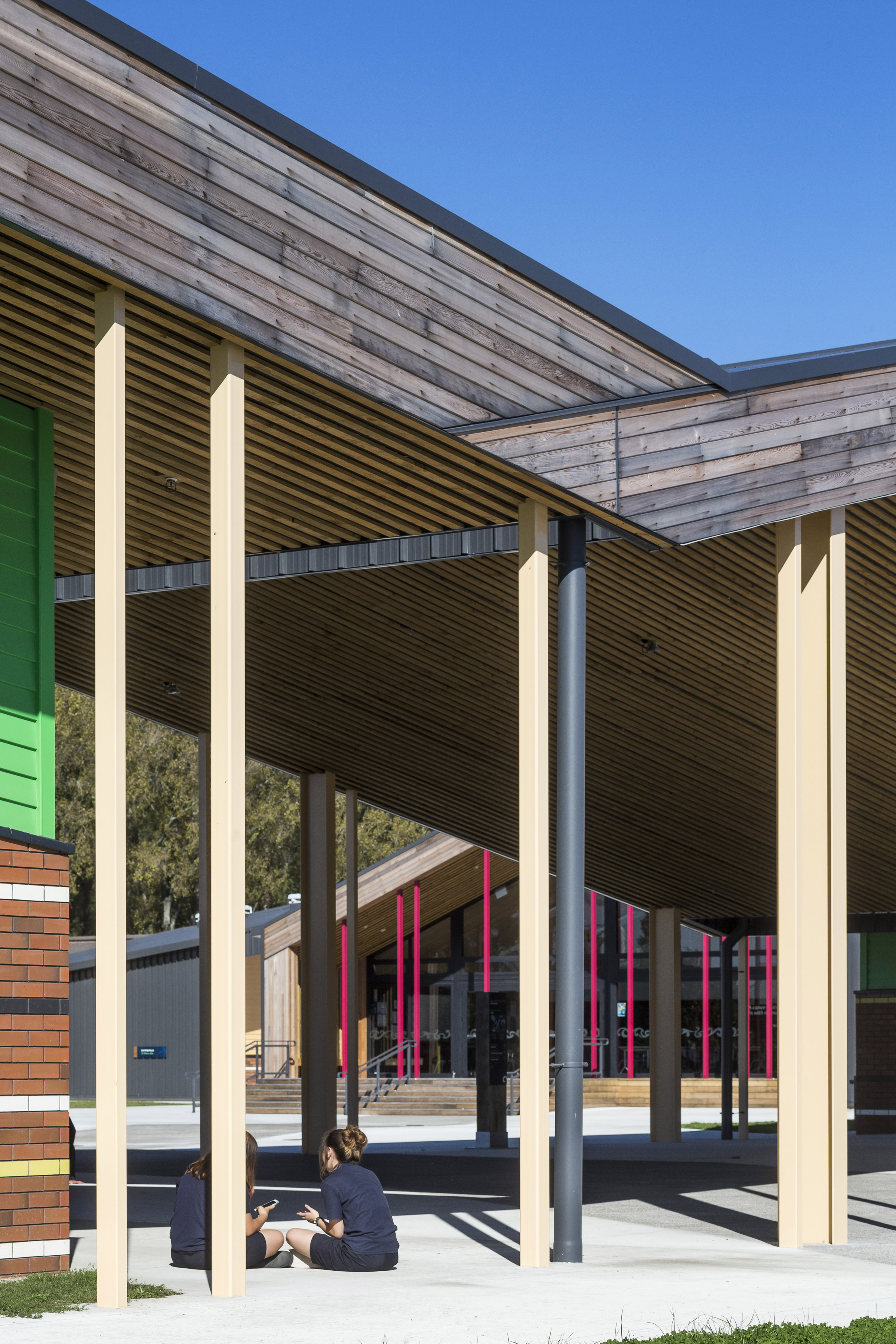
Tarawera High School, 2016
Kawerau. Photograph: Patrick Reynolds.
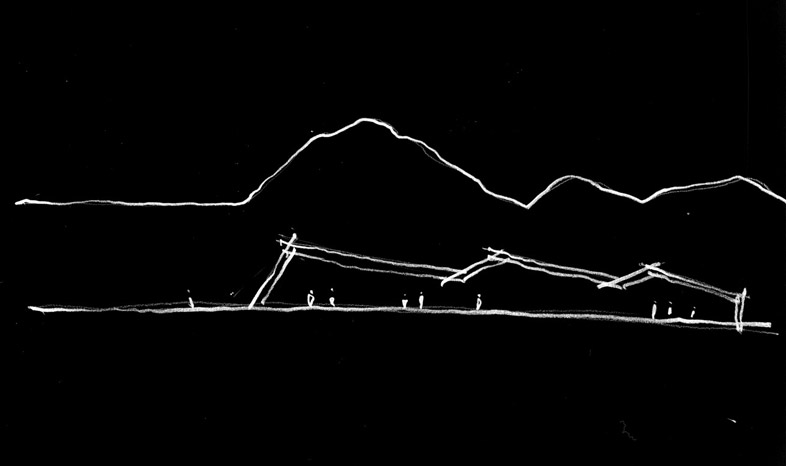
Tarawera High School, sketch
by Rich Naish.
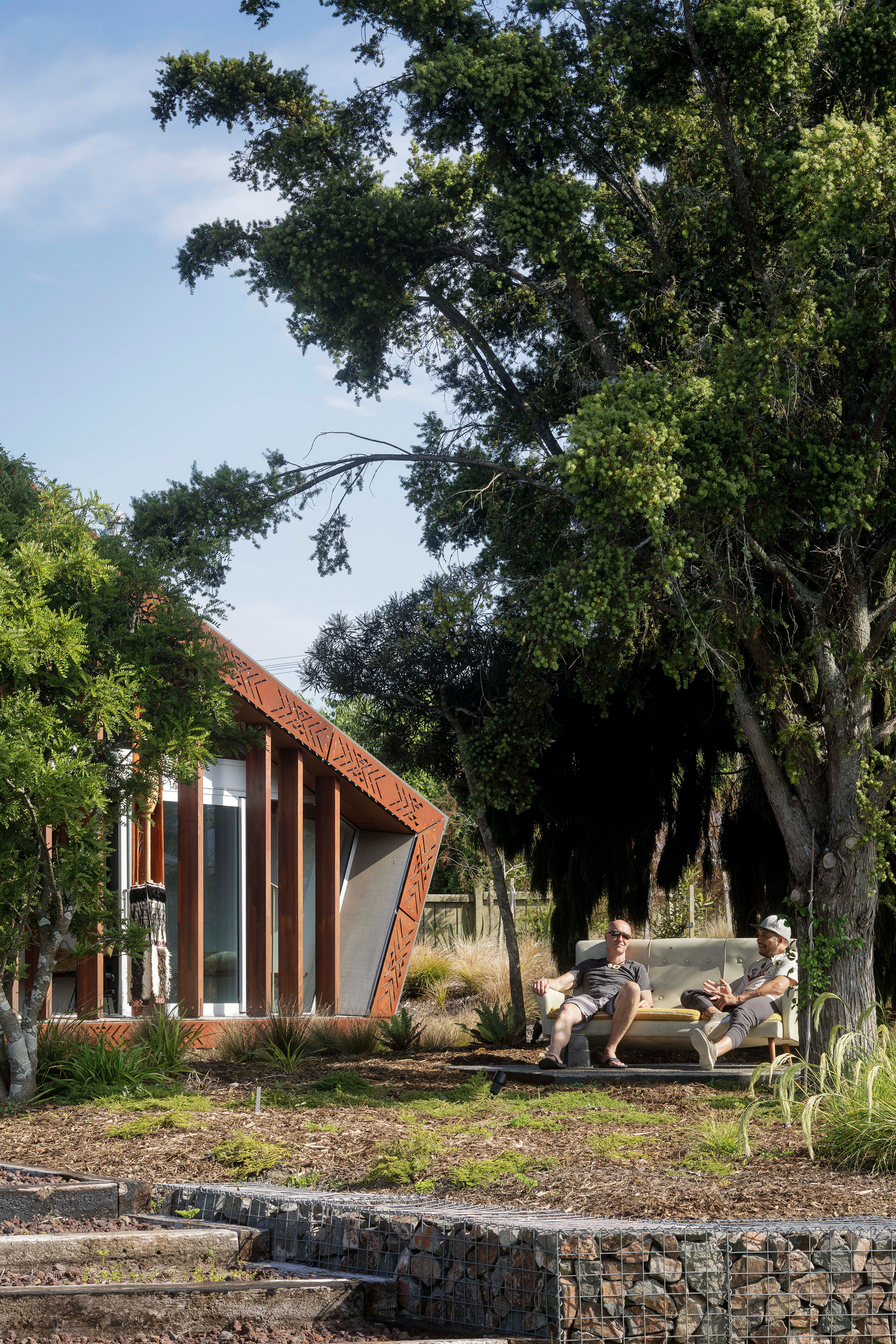
Tūrama, 2017
Photograph: Patrick Reynolds.
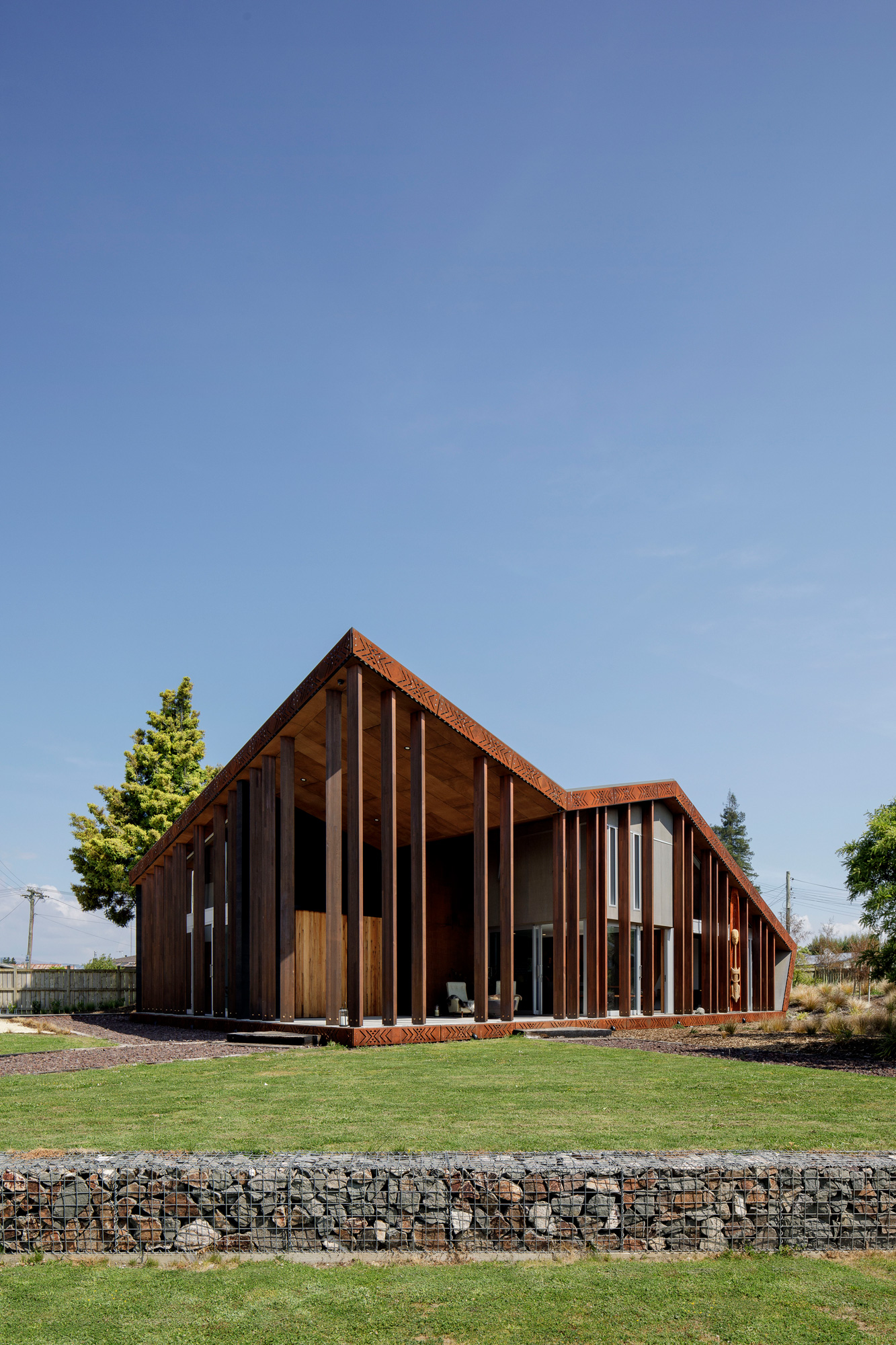
Tūrama, 2017
Photograph: Patrick Reynolds.
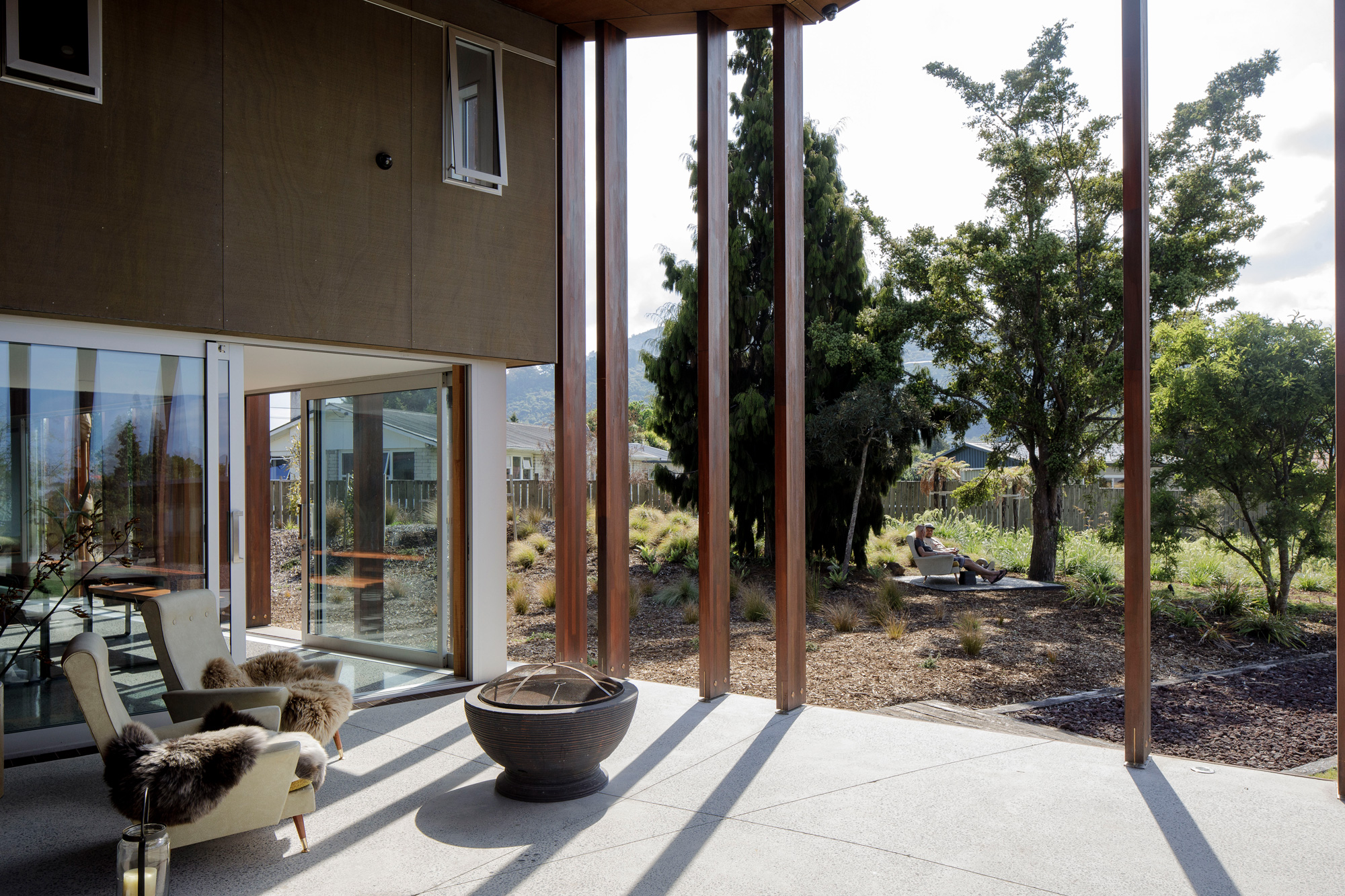
Tūrama, 2017
Photograph: Patrick Reynolds.


